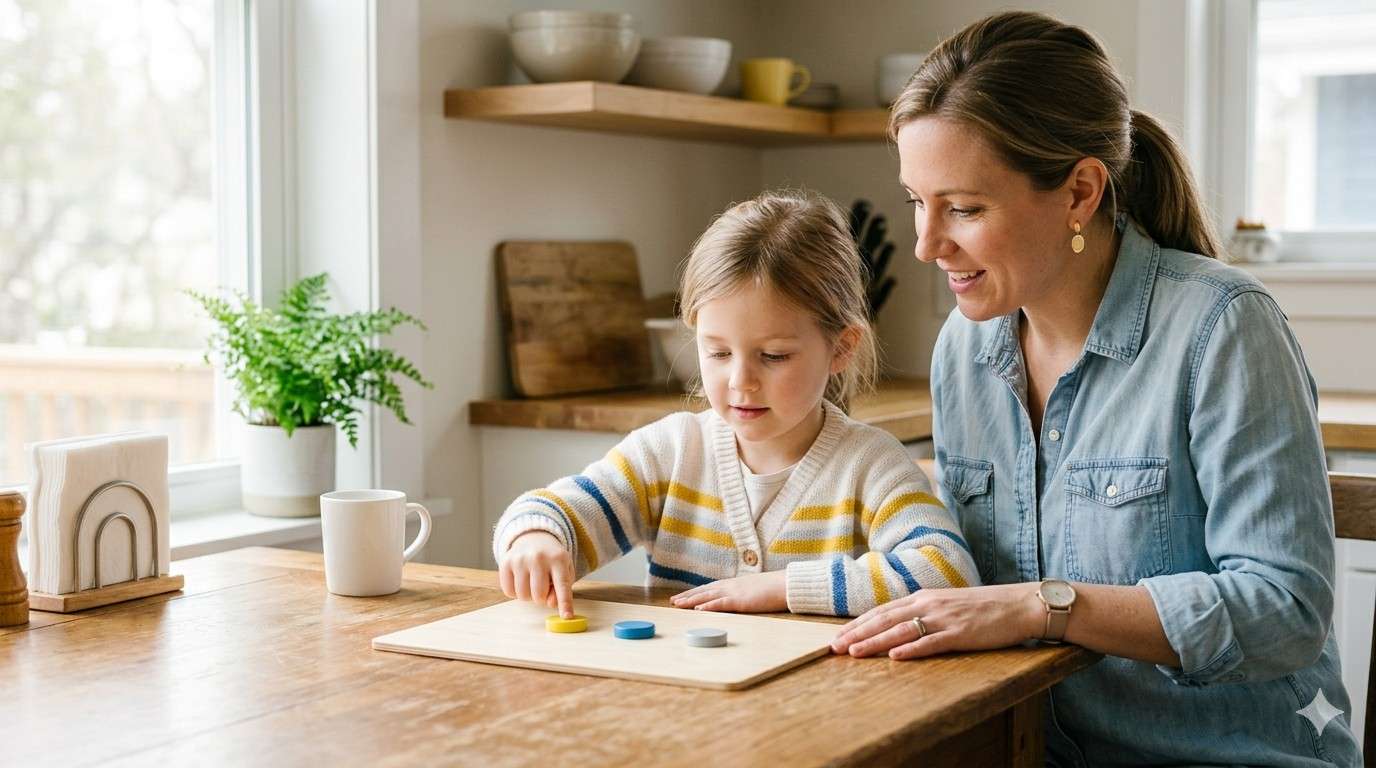
If your child is learning to read, you have probably heard the word phonics many times. For parents, it can sound more technical than it really is. At its core, phonics is about the relationship between print and speech. Children learn that letters represent sounds, and then they use those sound-letter links to read and spell words.
That is the clearest phonics definition. In plain language, phonics teaches children how written letters and letter groups match the sounds in spoken words. When a child sees c-a-t, says /k/ /a/ /t/, and blends those sounds into cat, that child is using phonics. A phonics definition simple enough for most families is this: letters stand for sounds, and when you put the sounds together, you can read the word.
This is also the easiest phonics definition for kids. A simple definition of phonics is that it teaches the code of written English. Instead of memorizing every word they see, children learn patterns that help them unlock new words on their own. That is why phonics matters so much in the early years. It gives children a process they can rely on.
Why Phonics Matters for Reading Success
Phonics matters because reading soon asks children to do more than recognize a few familiar words. Once books become less predictable, children need a dependable way to work through words they have never seen before. Phonics gives them that path. It helps them decode unfamiliar words accurately, and that accuracy supports fluency, confidence, and comprehension.
The phonics reading definition is really about decoding. In reading, phonics means using letter-sound knowledge to identify unfamiliar words in print. The phonics literacy definition fits phonics into the bigger picture of literacy, where accurate word reading and spelling help free up mental energy for understanding the text.
Research strongly supports that foundation. The National Reading Panel concluded that phonics instruction produces significant benefits for children in kindergarten through sixth grade and for children having difficulty learning to read, with the strongest gains coming from systematic phonics instruction.1 A parent-friendly summary of those findings explains that the greatest improvements came when phonics elements were taught in a planned sequence rather than introduced only as they appeared in books.4 The Institute of Education Sciences also recommends teaching children how sounds link to letters, how to decode words, and how to read connected text every day in kindergarten through third grade.2
“The research literature provides solid evidence that phonics instruction produces significant benefits for children from kindergarten through 6th grade and for children having difficulty learning to read.” 4
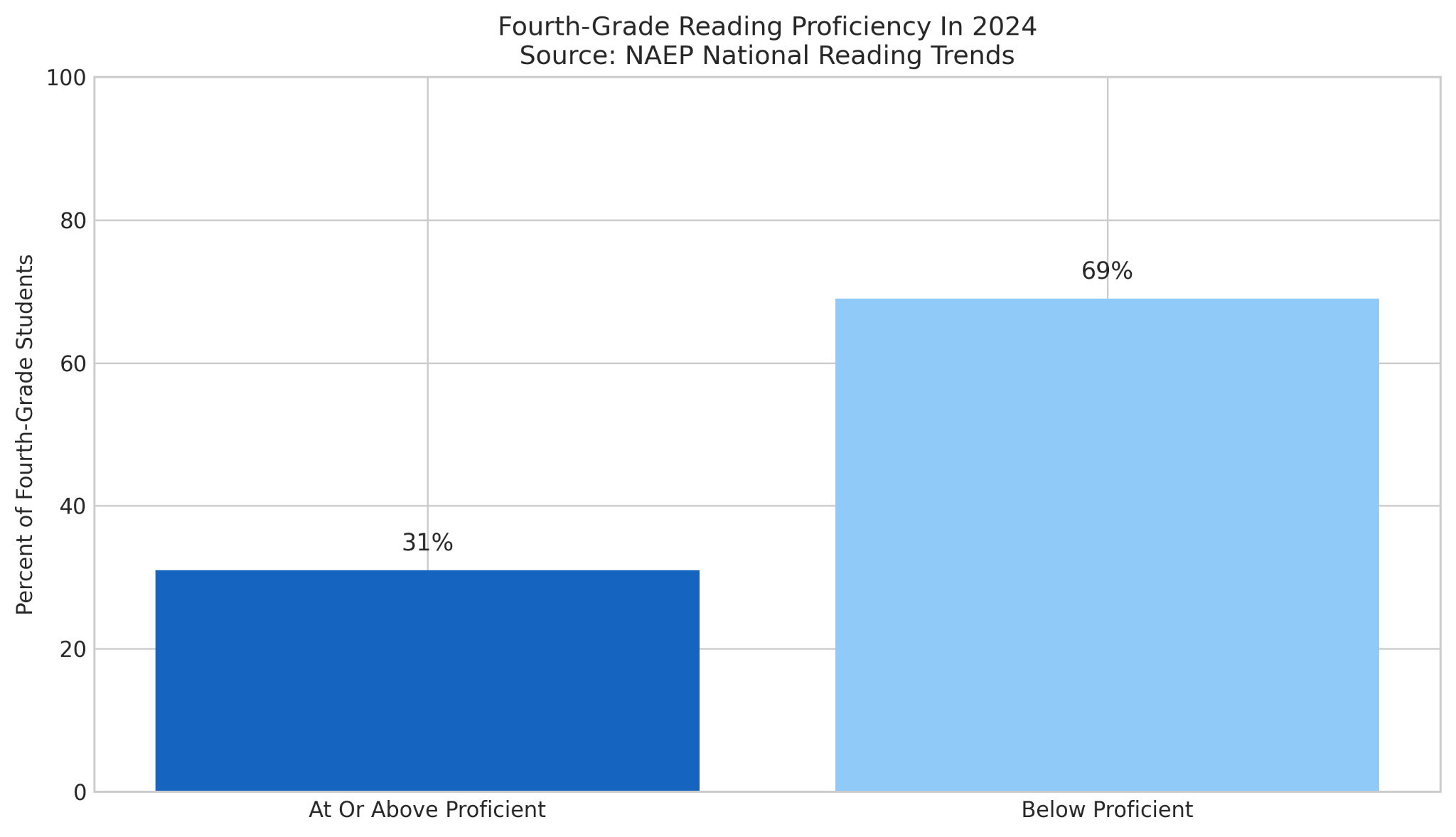
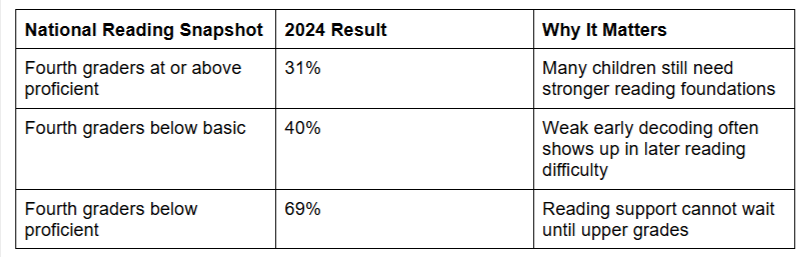
Current national data helps explain why this still matters. According to the 2024 NAEP reading results, only 31% of fourth-grade students performed at or above proficient, while 40% performed below the basic level.3
How Phonics Works in Practice
The phonics meaning in education becomes much clearer once you see what it looks like in real life. Children usually begin by learning that individual letters represent sounds. They learn that m can say /m/, s can say /s/, and t can say /t/. Then they blend those sounds into simple words such as sat, mat, and sit. Later, they learn more complex patterns, including digraphs such as sh and ch, vowel teams such as ee and oa, and silent-e patterns.
This is why many parents find it helpful to think of phonics as a code. Phonics explained simply means that print is a code children can learn to crack. Phonics explained for parents means recognizing that reading is not only about exposure to books. Children also need direct practice in how written English works.
A few examples make that clearer. A child may read the sun by saying /s/ /u/ /n/ and blending the word. The word shop works differently because sh is a digraph, meaning two letters make one sound. A word such as boat introduces a vowel team, while ride shows how the final e changes the middle vowel sound. These are small steps, but together they build the decoding system children need.

The phonics meaning for kids is simply learning the sound each letter makes, blending sounds to read words, and breaking words apart to spell them. That is why phonics supports reading and spelling at the same time.
What Phonics Looks Like in the Early Years
The phonics definition of early years is not about long lessons. In preschool, kindergarten, and first grade, phonics works best when it is short, explicit, and repeated often. Children benefit from quick lessons, many examples, and immediate feedback. They may trace letters while saying sounds, tap out sounds with their fingers, or read a short list of words built from the same pattern.
This is where Linnea Ehri’s work helps explain what parents often see at home. Children move from slow, sound-by-sound reading toward more automatic word recognition because repeated mapping between letters and sounds strengthens memory for words.6 At first, a child may labor through a map or shop. After enough correct practice, that same child begins to recognize the word more quickly.
The early years are when momentum starts to build. A child who gets steady practice with letter-sound links and blending usually becomes more confident over time. A child who mostly guesses may appear to do fine at first, but struggle later when texts become harder.
Signs a Child May Be Struggling With Phonics
When phonics is weak, children often show it in recognizable ways. One of the biggest signs is guessing. A child may look at a picture, notice the first letter, and produce a word that makes sense in context but does not actually match the print. Another sign is difficulty sounding out new words. Some children can read familiar books they have partly memorized, but lose confidence with unfamiliar text.
Parents may also notice confusion between letter names and letter sounds, trouble blending sounds smoothly, or frustration during short reading tasks. Emotional signs matter too. A child who says “I hate reading,” avoids books, or shuts down when asked to sound out a word may be telling you that decoding still feels too hard.
The encouraging news is that phonics is teachable. Because it is a structured skill, it can usually improve with clear instruction, repetition, and regular practice.
How to Teach Phonics at Home
Most families do not need an hour-long reading lesson. In fact, phonics practice usually works better in short, focused sessions. Ten to fifteen minutes is often enough. A good routine begins with reviewing a few known sounds, introduces one new pattern, practices several words using that pattern, and then ends with a short sentence or short book passage.
The most helpful home teaching is calm and direct. If your child reads tap as top, bring attention back to the letters and sounds. Point to each letter, say the sounds slowly, and blend again. Immediate correction matters because it keeps guessing from becoming a habit.2
Multi-sensory practice can help as well. Saying the sound, tracing the letter, writing the word, and reading it back gives the child several ways to reinforce the same pattern. A practical progression might begin with a few consonants and one short vowel, then build words such as sat, sit, sip, and sap before adding a new sound.
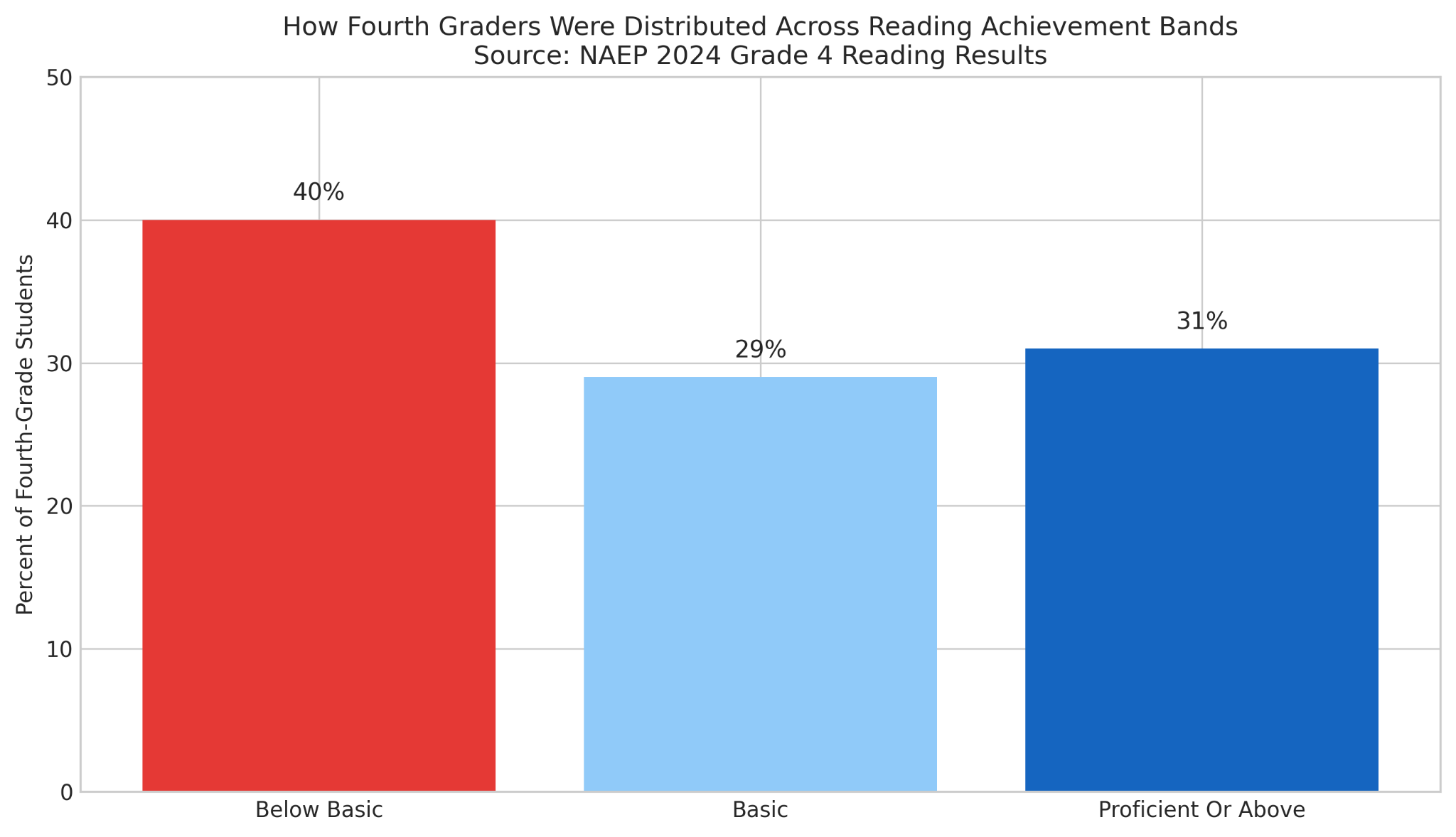
That kind of small daily work matters. In 2024, fourth graders were spread across reading achievement bands, with 40% below basic, 29% at basic, and 31% at proficient or above.3 Those numbers reflect many factors, but they reinforce the value of strong foundational instruction early on.
Where Technology Can Help
Families are often told to practice every day, but real life gets in the way. Parents are busy, and children are tired. Not every family can listen closely to oral reading each night and give immediate correction. This is where technology can help support consistency.
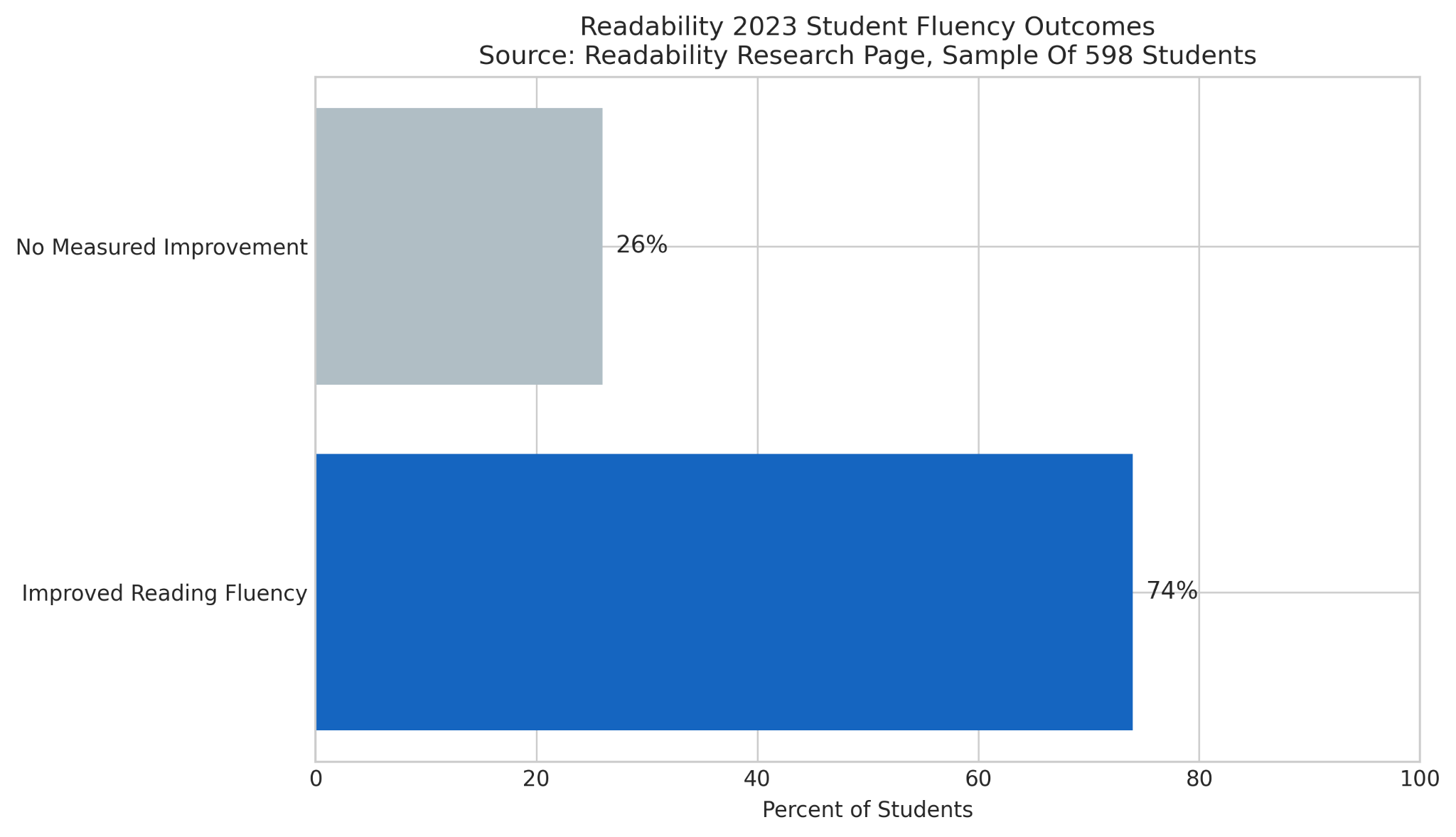
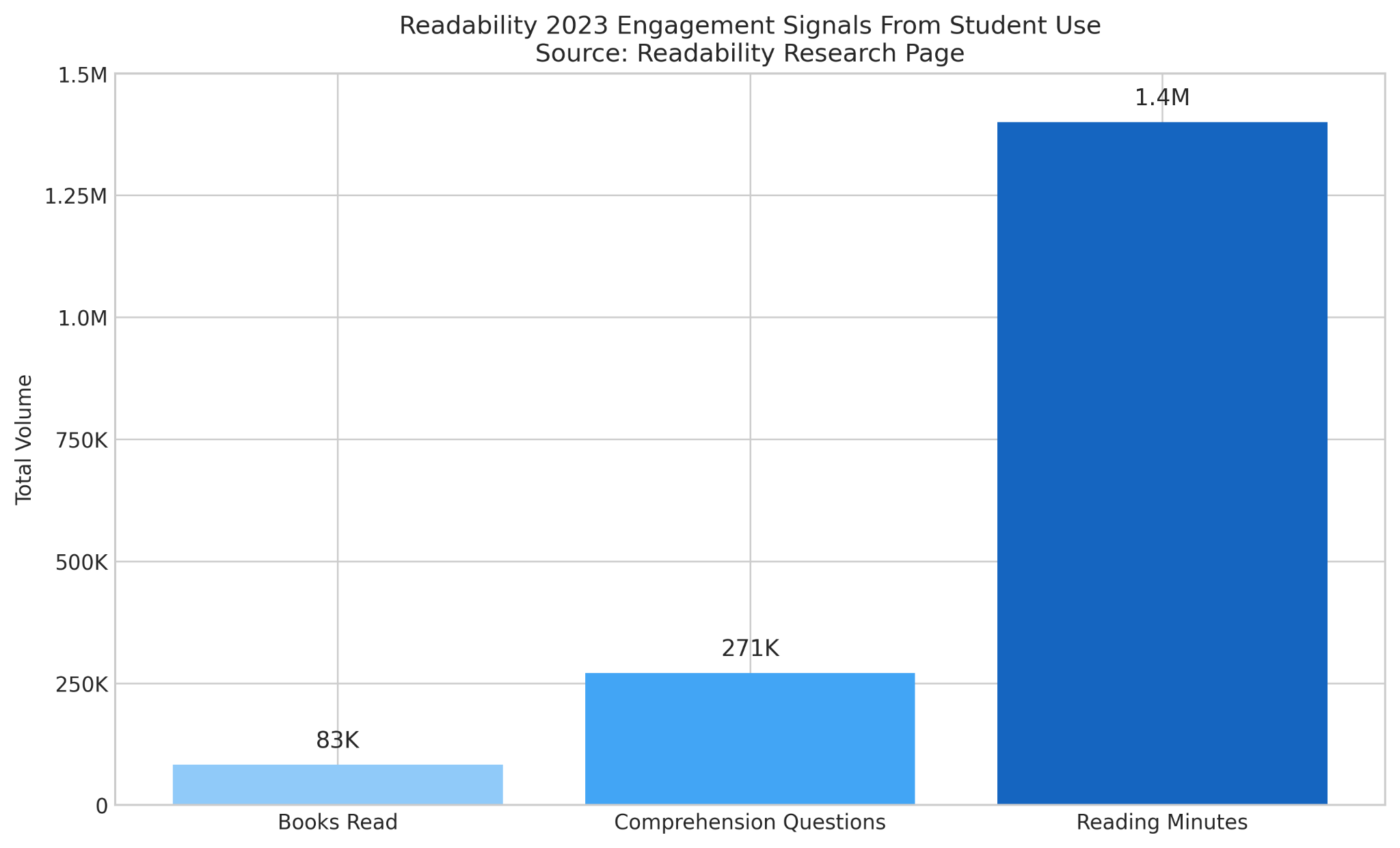
Readability is one example. Data from 598 students in 2023 showed that 74% improved reading fluency while using the platform. The same report says students collectively read more than 83,000 books, answered nearly 271,000 comprehension questions, and logged 1.4 million reading minutes.7
For parents, the takeaway is practical. A tool that listens to a child read aloud, gives feedback, and tracks progress can make home practice more consistent. It does not replace parents or teachers, but it can reinforce the same decoding habits children need.
Phonics and the Other Parts of Reading
Phonics is often discussed alongside several other reading skills, and that can make the topic feel more confusing than it is. Phonemic awareness is hearing and manipulating sounds in spoken words before print is involved. Phonics connects those sounds to letters. Fluency is accurate, smooth reading. Vocabulary is knowing what words mean. Comprehension is understanding the text.
Phonics is therefore not the whole reading process, but it is one of its foundations. Children also need language, knowledge, vocabulary, and meaningful reading experiences. At the same time, a child who cannot reliably decode a sentence will have a much harder time understanding it.
Why a Steady, Reassuring Approach Works Best
For most parents, the challenge is not understanding the definition of phonics. It is knowing how to help without feeling like they need to become reading specialists. The reassuring truth is that small, steady support goes a long way. Children benefit from short routines, repeated patterns, immediate feedback, and encouragement when they get stuck.
That is why effective home support often sounds simple. Point to the letters. Say the sounds. Blend the word. Try again if needed. Read a short sentence. Praise the effort. Over time, those small moments help children move from sounding out words slowly to reading with more ease and confidence.
Phonics is one of the clearest tools children have for learning how reading works. The earlier they understand that print maps onto speech, the easier it becomes to read independently, spell more accurately, and approach books with less fear.
Frequently Asked Questions: What Is Phonics? Meaning, Examples, and How to Teach It at Home
What Is Phonics?
Phonics in simple terms is teaching children that letters and letter groups stand for sounds. Once they know those sound-letter matches, they can blend sounds to read words and break words apart to spell them.
What Does Phonics Mean in Reading?
In reading, phonics means using letter-sound knowledge to decode unfamiliar words. It gives children a way to figure out words instead of relying on pictures or guesses.
What Are Phonics and Why Are They Important?
Phonics are the sound-letter relationships in written language and the instructions used to teach those relationships. They are important because decoding is a major step toward accurate, fluent, and independent reading.1 2
How Do You Explain Phonics to a Child?
A simple explanation is: letters stand for sounds, and when we put the sounds together, we can read the word. Most children understand phonics best when that explanation is followed by a short example such as s-u-n becoming sun.
What Is a Basic Example of Phonics?
A basic example is reading cat by saying /k/ /a/ /t/ and blending the sounds into cat. Another example is learning that sh in ship makes one sound even though it uses two letters.
What Are the Five Pillars of Reading and Where Does Phonics Fit?
The five pillars commonly discussed are phonemic awareness, phonics, fluency, vocabulary, and comprehension. Phonics fits near the beginning because it helps children turn print into spoken words they can recognize and understand.1
What Is the Difference Between Phonics and Phonemic Awareness?
Phonemic awareness is the ability to hear and manipulate sounds in spoken words without using print. Phonics adds letters by teaching how those sounds connect to written symbols.
How Can I Teach Phonics at Home?
Teach phonics at home with short, focused sessions that review familiar sounds, introduce one new pattern at a time, and practice reading words and short sentences. Keep the routine calm, direct, and encouraging.
How Long Does It Take a Child to Learn Phonics?
There is no single timeline because children differ in readiness, instruction quality, and practice time. Many children make visible progress over months of consistent, systematic practice.